The Missing Link, June 9
Posted: June 10, 2016 Filed under: knowledge | Tags: branding, digital, strategy Leave a commentGet up and link!

In the latest newsletter: a tribute to Muhammad Ali, Mary Meeker’s presentation, BrandZ top 100 global brands, inside Trump’s mind, the cure for fear and more:
http://tinyletter.com/…/le…/get-up-and-link-the-missing-link
To subscribe:
http://www.tinyletter.com/yonikish
The Missing Link, May 26
Posted: May 28, 2016 Filed under: knowledge | Tags: branding, digital, strategy Leave a commentAs Elon Musk would probably say: Please don’t link and drive!

The new newsletter is out:
http://tinyletter.com/YoniKish/letters/please-don-t-link-and-drive-the-missing-link
To subscribe:
The Missing Link, May 12
Posted: May 12, 2016 Filed under: knowledge | Tags: branding, digital, strategy Leave a commentThese are not the links you’re looking for…

They are here:
http://tinyletter.com/YoniKish/letters/these-are-the-links-you-re-looking-for-the-missing-link
Three simple steps to subscribe:
1. Go to
www.tinyletter.com/yonikish
2. Write your email and click “Subscribe”
3. When you receive the confirmation email, click the link inside it to confirm your subscription
The Missing Link, April 28
Posted: April 30, 2016 Filed under: knowledge | Tags: branding, digital, strategy Leave a comment
Ich bin ein Linker…
Feast your eyes on the latest issue of The Missing Link newsletter:
http://tinyletter.com/YoniKish/letters/the-missing-link-6
The Missing Link – Special Passover Edition
Posted: April 16, 2016 Filed under: knowledge | Tags: branding, digital, strategy Leave a comment
Did you ever notice the Passover Haggadah is actually a bunch of lists?
From the Seder itself, to the Seder Plate, to Ma Nishtana (Why is this night different), The Four Sons, The 10 Plagues, Dayyenu, Ehad Mi Yodea (Who knows one), Had Gadya and the rest of the songs…
Passover is a carnival of curation.
So, to celebrate, this week’s newsletter is an ode to lists – the Missing List, if you will.
http://tinyletter.com/YoniKish/letters/the-missing-link-special-passover-edition
The Missing Link, March 31
Posted: March 31, 2016 Filed under: knowledge | Tags: branding, digital, strategy Leave a comment
I link, therefore I am.
The freshly-baked issue of The Missing Link newsletter can be found in my loyal subscribers’ mailboxes.
You can find YOUR missing link right here:
http://tinyletter.com/yonikish
The Missing Link, March 17
Posted: March 20, 2016 Filed under: knowledge | Tags: branding, digital, strategy Leave a comment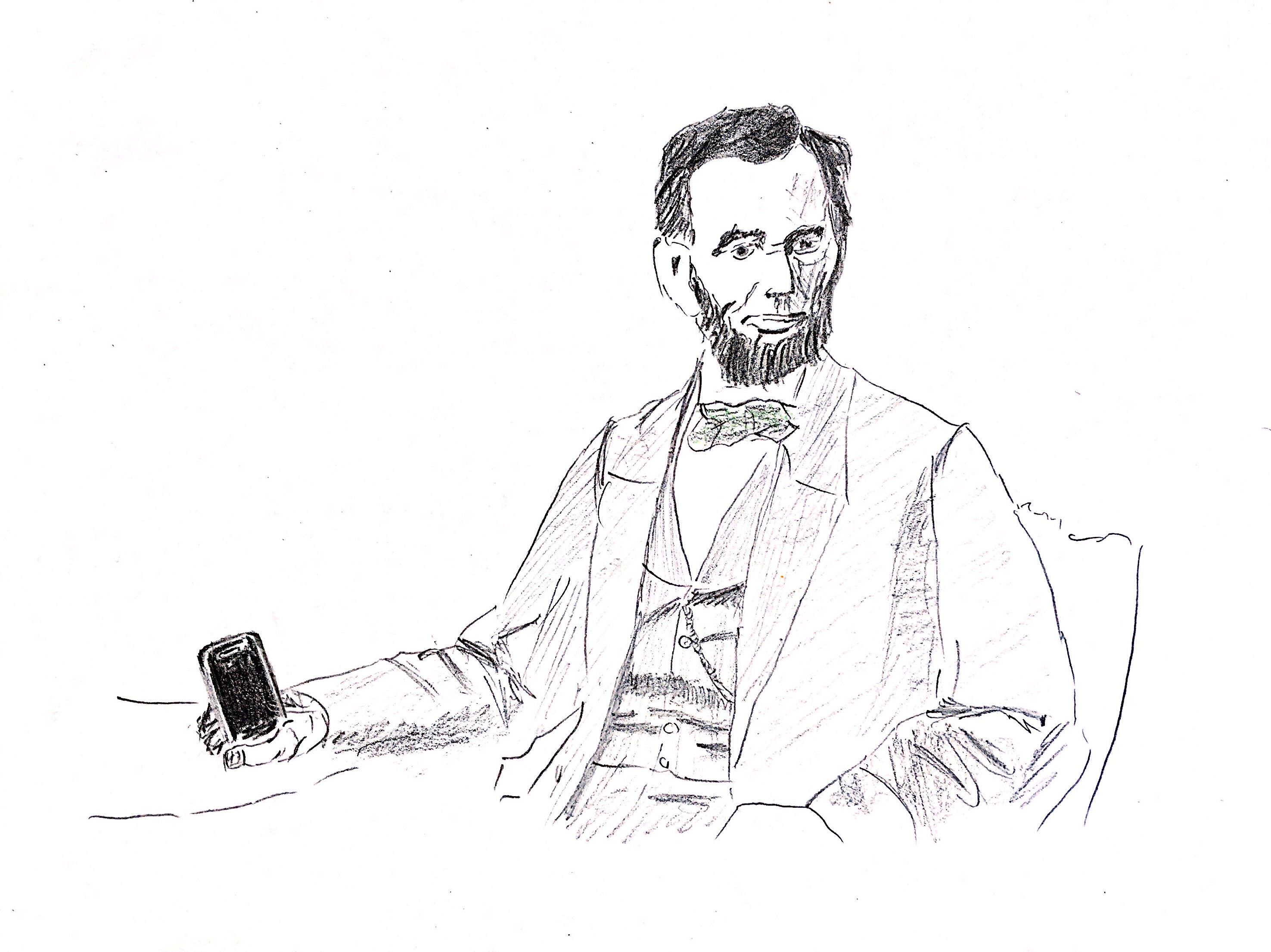
Look, it’s Abraham Linkin’!
Two weeks have flown by, which means it’s time for a fresh newsletter. Those who have already subscribed should find it in their (hopefully-not-junk-)mailbox. Those who haven’t, now have an excuse to do so:
http://tinyletter.com/yonikish
The Missing Link
Posted: March 3, 2016 Filed under: knowledge | Tags: branding, digital, strategy Leave a comment
I’m a voracious reader.
In the past decade, I’ve accumulated thousands of articles on numerous subjects: strategy, marketing, branding, sports, science, cinema… Which got me thinking, Why not share the joy?
So I’m launching a bi-weekly newsletter.
Every two weeks, subscribers to the newsletter – named “The Missing Link” – will get 7 links (why 7? One article, every couple of days).
Be warned: most articles will be fairly long. But I promise they’ll be interesting.
To me, at least.
You gotta link it:
http://tinyletter.com/YoniKish
Thinking Digitally
Posted: March 29, 2012 Filed under: strategy | Tags: business strategy, design thinking, digital, digital thinking, interface, marketing strategy, strategy Leave a commentWilliam Gibson was spot on: The future is already here – it’s just not evenly distributed. As technology develops exponentially, consumers’ behavior evolves arithmetically, and companies change linearly, the digital divide between corporations and their consumers widens. We live in a digital world; digital thinking is a key skill that any C-level executive should possess, and digital principles should permeate every facet of the business. Yet in many organizations we still find a mid-level marketing manager responsible for digital activities, sometimes developing “digital strategy” for various brands.
But it shouldn’t be about “digital strategy” for a brand – it should be about Strategy (with a capital S) for a company. It’s time we moved from digital (as a specialized discipline) to digital thinking.
—–
Several years ago, Design Thinking was all the rage. “At its simplest level,” IDEO President Tim Brown explained in an interview, Design Thinking is “about using the processes that designers have used for many years but applying them to a broader set of challenges both in business and society.” Although the logic was impeccable, Design Thinking was unsuccessful beyond the confines and minds of IDEO. But that logic is, in my eyes, a valid one; the same logic should be applied to Digital Thinking. Digital Thinking is about using digital principles and applying them to business in general.
—–
So what does it mean to think digitally? What are those principles that should serve as filters through which today’s managers view the world and approach their business? Here they are, somewhat logically ordered:
1/ Think network
A digital world is a connected world. Thus, at the core of a digital world is the network, and when building or transforming a business for a digital world one must follow the rules of the network (hey there, Metcalf), connecting both people and things. Successful digital-world-businesses control the access to key network interfaces.
The currency of the network, of course, is the link. In a networked world, I link therefore I am.
Questions to ask: How has the network changed your business – and how can your business leverage the network? Can you own a network interface?
Role model: IBM’s Smart Planet.
2/ Think collaboration
Dialogue, conversation, participation, collaboration, open innovation, co-creation, crowdsourcing, UGC, P2P – call it what you will. The network allows businesses and people to collaborate at scale like never before.
Questions to ask: What parts of your value chain can be transformed thanks to collaboration?
Role models: P&G’s Connect+Develop, Guardian’s Open Journalism, Kickstarter, Linux.
3/ Think sharing
Collaboration starts with sharing, and sharing seems to be growing exponentially in a digital world – see Zuckerberg’s Law. Social networks should really be called sharing networks – there is no social (or social graph for that matter) without sharing, and people’s willingness to share is a major driver behind Facebook’s ascendance. The sharing of individual and group actions, photos, interests, and physical goods and resources isn’t done just for sharing’s sake – it also serves the need for identity building and signaling [see principle #7].
Questions to ask: What shared content/actions/goods have the potential to affect your business?
Role models: Facebook, Pinterest, Airbnb, Zipcar.
4/ Think context
Meeting and engaging stakeholders at the right time and place – i.e., in the right context – is a key success factor for any business, even more so in a digital world. Location and mobile are the “where” and “how” of context, which explains their huge importance; together they serve commerce (recommendations, coupons, deals, mobile payments), content (mobile as a 1st and 2nd screen) and creativity (photo sharing). Add in “social” and you get a truly potent mix (hence SoLoMo, although I prefer ShLoMo – much more catchy, and follows the logic of the previous principle). The recent proliferation of proximity/serendipity-based social networking is a case in point.
Questions to ask: What are the key contextual markers (timing, location, motivations) the fulfillment of which will drive your business?
Role models: Instagram, Path, Foursquare.
5/Think now
If location and mobile are the where and the how of context, now is the when. A digital world is a word of live, real time, on-demand fulfillment. “Now” services are instant and seamless. Seamlessability (invented that one just now) is a key issue from the consumer’s point of view – think about areas like mobile payments and content delivery.
Questions to ask: How can you make your business/product/services more instant? How can you make it seamless?
Role models: Twitter, Tesco Homeplus subway virtual store, Amazon Web Services.
6/Think data
Predictive analytics. Machine-learning algorithms. Contextual businesses rely on data. BIG data. They analyze huge swaths of it, structured and unstructured, using massive cloud databases.
Data is today’s Intel inside. The war between Google and Facebook, Google and Apple – heck, Google and everybody else – is, to a large extent, war over data. Interface control relies on data
Consumers care about data, too. Data visualization is becoming more and more important. In the future we’ll talk about the data experience.
Questions to ask: What does your business do with all that data?
Role models: Google Translate, IBM Smart Planet, Visual.ly.
7/Think human
The more we become digital, the more we rely on data – the bigger the need to stay human. “Human” means personal/ized. It means authentic and transparent. It means interesting, and memorable (hence curation). It means private, yet social (fine line there, which Facebook keeps moving). It means playful (hence gamification). And it means physical.
Questions to ask: How can your business convey human-ness?
Role models: Pandora, Microsoft Kinect, Siri, Zynga.
8/Think simple
Keep it simple, stupid. Make stuff that “just works”. Seamlessly.
Questions to ask: How can you simplify your product/service?
Role models: Apple, Square , Dropbox
9/Think “free”
In a digital world, free can take many forms.
Free as in “free beer” (gratis).
Free as in “free-in-exchange-for-ads/your-privacy”.
Free as in freemium.
And even free as in freedom – to share/copy/incite a revolution (libre).
Information does not always want to be free. But it certainly helps.
Questions to ask: What type of free/dom does your business stand for?
Role models: Facebook, Dropbox, Evernote
10/Don’t think – DO
—–
You’ll notice the principles are not mutually exclusive – they overlap and interconnect in myriad ways. Industries that move along the digital/technological curve incorporate an increasing number of those principles – the car industry is an interesting example (networked, data intensive, mobile/location vehicles); whereas disrupted industries experience a “sudden principle onslaught” to which they are unable to adjust. Mind you, with technological tools and platforms changing constantly, the principles keep evolving as well; but one needs to differentiate between the principles on one hand – and the tech/tools that serve them, on the other (mobile and cloud computing, apps and APIs, 3D printing etc.).
 yonisblog